--:--
Street lighting cabinet simulation
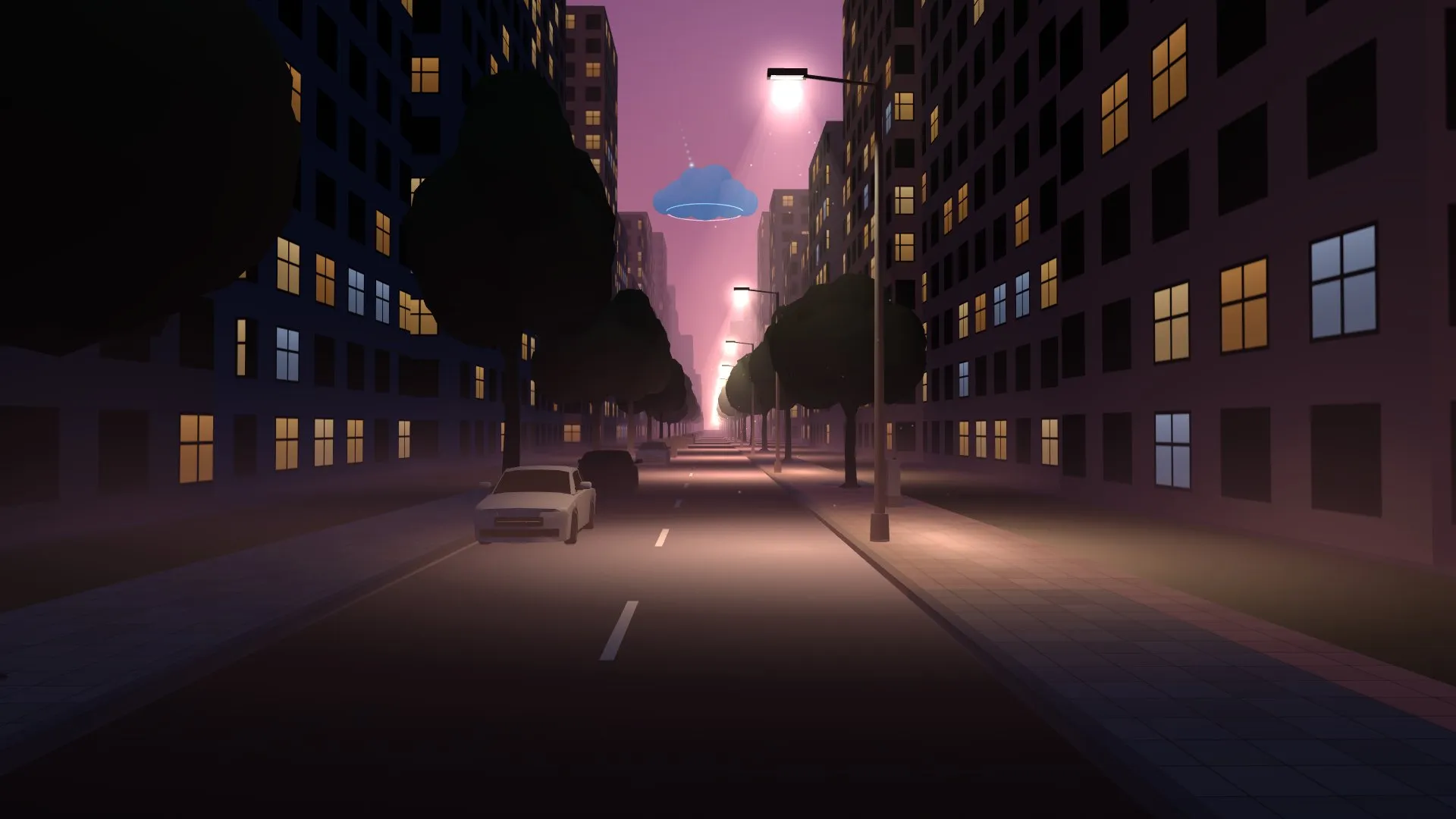
The simulation follows a street with twelve luminaires and a cabinet with GridBit modules from the afternoon to the next night, when the view rises over the whole city. The sun moves along its real path over central Bulgaria today; the town, the cabinet and every value on the platform are simulated.
Five modules on one DIN rail
RTU-4 switches the lighting, MCU-4 measures every phase, SMU-3 watches the supply and the outputs to the poles, GWU-5 connects the cabinet and WDT-1 restarts what hangs. The contactor and the breakers sit on the rail below.
RTU-4 switches on after sunset
It calculates sunrise and sunset from the GPS coordinates in its registers and keeps the time on its own clock with a backup battery. Here it switches on 10 minutes after sunset: the contactor closes and the street lights up.
Every minute, a reading goes to the platform
GWU-5 reads the modules over Modbus RTU and sends voltage, current and power per phase and the state of the relay and of every branch over the mobile network. The panel shows what the platform receives.
Two luminaires fail
The current of phase L2 drops below what its luminaires should draw. The platform opens an alarm with the cabinet, the phase, the expected and the measured current. Nobody has to report a dark street.
Night saving
RTU-4 can switch the lighting off for part of the night, up to 75 %, and keeps the saving constant as the nights change length. Here 30 % of the night stays dark: half of the lit time comes before the gap, half after it.
The connection drops
The mobile network goes down and the platform marks the cabinet offline. The lighting keeps its schedule: RTU-4 switches the morning part on by its own clock, and GWU-5 keeps every reading in its memory.
The lighting goes off before sunrise
The connection comes back and GWU-5 sends the readings it kept, so the gap in the chart fills. Ten minutes before sunrise RTU-4 opens the contactor. The platform has the whole night on record: each switch-on and switch-off, the energy used and the alarm on L2.
The crew checks the repair from the platform
After the two luminaires are replaced, the operator switches the line on from the platform. The command goes through GWU-5 to RTU-4, the current of L2 is back in range and the alarm closes. Then the cabinet returns to its schedule.
The whole city on one platform
Cabinet 14 is one of many. In the evening every cabinet in the city switches its streets on by its own schedule and sends its readings to the same platform.
An outage in one district
A fault in the grid leaves one district without supply and its lights go out. Its cabinets stop sending data, and the platform marks them as having no connection and outlines the area, so the crew sees where to look before anyone calls. Then try it yourself in free mode.
Your browser cannot show the 3D scene. The steps and the platform panel still work.
Free mode
Time
Schedule
Scenarios
Command from the platform
The cabinet is offline and cannot receive a command.
View
Drag to turn the view
In the cabinet
What sits on the DIN rail
The same modules work in the cabinets of the street lighting system. Each one has its own page with the specifications and the registers.
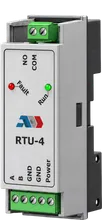 RTU-4Astronomical relay. Switches the lighting by sunset and sunrise, with an offset of up to 90 minutes and night saving of up to 75 %.Open the module
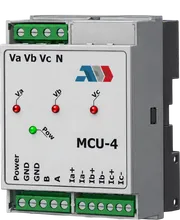 MCU-4Three-phase network analyser. Voltage, current, power, cos φ and energy per phase.Open the module
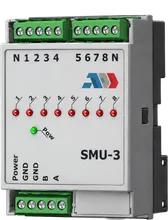 SMU-3Voltage detector. Here three inputs watch the supply of the cabinet and five show which outputs to the poles have voltage.Open the module
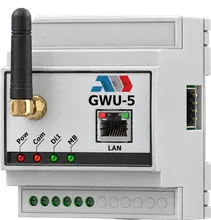 GWU-5Gateway with GridBit OS. Reads the modules over Modbus RTU, sends the data over 4G LTE and keeps it while the link is down.Open the module
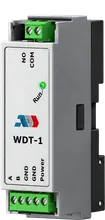 WDT-1Watchdog relay. Restarts the electronics when they stop answering after a surge or a bad supply.Open the module
How the simulation works
Real sun, simulated cabinet
The position of the sun and the times of sunrise and sunset come from the solar equations for the centre of Bulgaria, for today or for any date you pick in free mode. RTU-4 makes the same kind of calculation from the GPS coordinates in its registers.
The street, the city, the cabinets and every value on the panel are simulated: twelve LED luminaires spread over three phases, one reading a minute and an alarm when a phase draws less than 80 % of its expected current. In free mode you can move the switching up to 90 minutes before or after sunset and sunrise, as in the registers of RTU-4.
- Sun position
- central Bulgaria, 42.73° N, 25.49° E
- Switching on
- 10 minutes after sunset
- Switching off
- 10 minutes before sunrise
- Night saving in the story
- 30 % of the night
- Luminaires
- 12 × 90 W LED, 4 per phase
- Readings
- one a minute
How does the cabinet know when to switch the street lighting on?
RTU-4 calculates sunrise and sunset for its location from the GPS coordinates in its registers and switches its relay by them, with an offset of up to 90 minutes before or after. Its own clock with a backup battery keeps the time, so the schedule holds without a connection.
What happens when the mobile connection drops?
The lighting keeps its schedule, because RTU-4 switches by its own clock. GWU-5 keeps the readings while the link is down and sends them when it connects again, so the platform gets the whole night.
What does the cabinet send to the platform?
GWU-5 reads the modules over Modbus RTU and sends voltage, current, power, cos φ and energy per phase from MCU-4, the voltage on the supply and on the outputs to the poles from SMU-3 and the state of the relay.
Can the lighting be switched outside the schedule?
Yes. The operator switches the lighting on or off from the platform, and GWU-5 passes the command to RTU-4 over Modbus RTU.
Are the values in the simulation real measurements?
No. The sun follows its real path over central Bulgaria, but the town, the cabinets, the twelve 90 W luminaires and every value on the panel are simulated to show how the system works.
Ask for a street lighting proposal
Tell us how many cabinets you have and what is in them. We answer with a configuration and a quote.